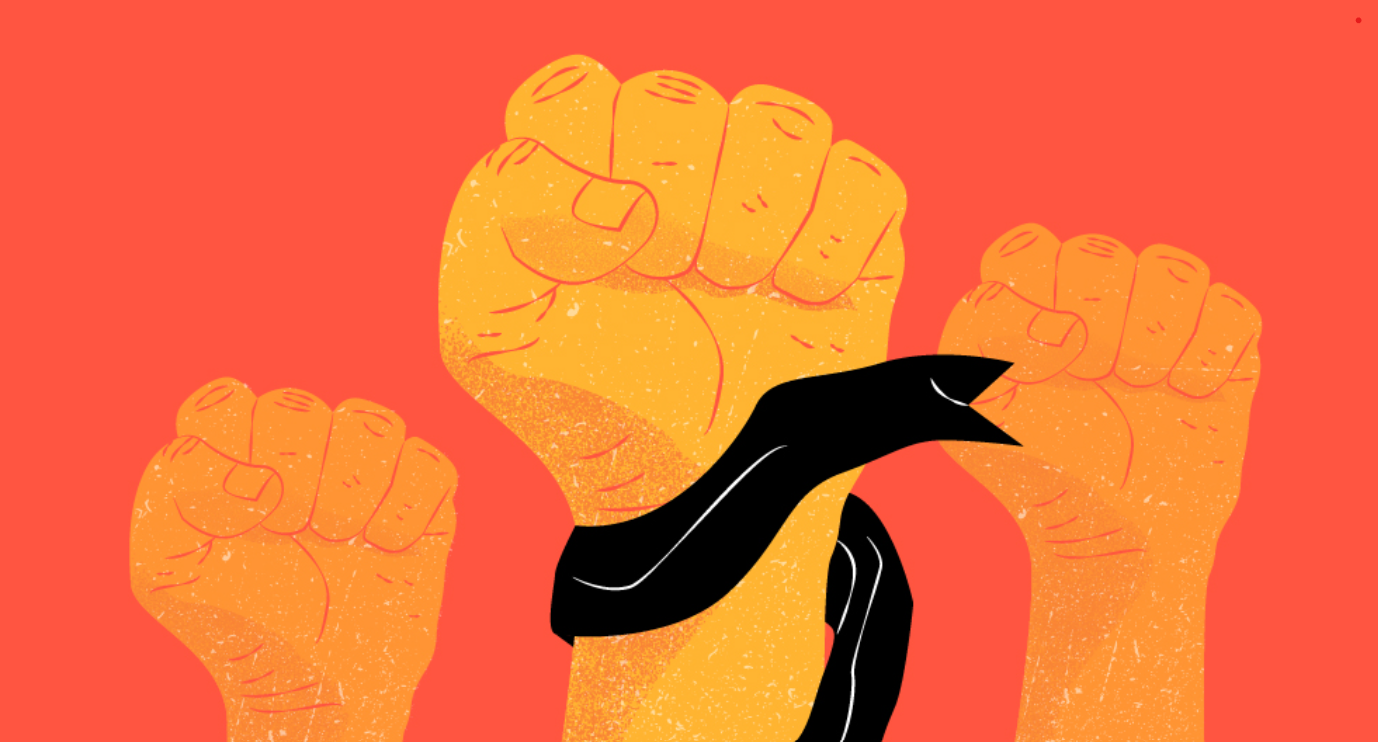
November 2nd marks the International Day to End Impunity for Crimes Against Journalists. The threats and dangers that constitute a stark reality for many journalists reinforce the importance of this day. Every year journalists are killed, tortured, and harassed for carrying out their work. Over 1,600 journalists have been killed since 2003 with a sharp increase in with a sharp increase over the past two years.
There is often no accountability for these attacks – a trend made glaringly evident by recent UNESCO data showing that killings of journalists go unpunished in 86% of cases. This impunity emboldens those responsible for these crimes while simultaneously creating a chilling effect on society, including journalists themselves. The impact this lack of justice has on journalists and their families cannot be understated, fuelling self-censorship, preventing journalists from working and aggravating the grief of those affected.
Journalists who are critical of powerful actors and those who report on conflicts, insurgencies and elections are at particular risk. The vital role of a free press as a public watchdog, holding power to account and spotlighting the truth, must be protected.
Media Defence continues to support and litigate cases of violence against journalists before domestic and international courts. We do this in order to combat impunity while reaffirming the obligation of states to protect media freedom and uphold democratic rights. To commemorate this day we are highlighting the cases of three exceptional journalists where impunity for the crimes committed against them persists.
Samuel Wazizi
We are working with local counsel in seeking accountability for the detention and death of Cameroonian journalist Samuel Wazizi. Wazizi, whose legal name is Samuel Ajiekah Abuwe, was arrested and held incommunicado in August 2019 in connection with his critical reporting on the government’s handling of the so-called Anglophone crisis in Cameroon. The fact of his death in custody was kept hidden by the authorities for almost a year.
After months of uncertainty, the Cameroon government eventually admitted that Wazizi died shortly after his arrest, alleging that it was the “result of severe sepsis”. This narrative was widely criticised after reports alleging signs of torture on Wazizi’s body were released. RSF said Wazizi’s death in detention, “is the worst crime against a journalist in the past 10 years in Cameroon”.
Since his arrest Wazizi’s lawyer, supported by Media Defence, has been trying to establish his whereabouts and the legal basis of his detention. The government had fiercely resisted those efforts at every stage of the various legal proceedings brought. A full and thorough investigation into Wazizi’s death is an imperative, and the government must hold to account all of those responsible for his death and for the fact that Wazizi’s family was in the dark about his whereabouts and his death for over ten months.
Arshad Sharif
October 2023, marked one year since the killing of prominent Pakistani journalist and news anchor for ARY News, Arshad Sharif. Yet, to this day no impartial and effective investigation into the circumstances of his death has been carried out.
A prominent critic of alleged corruption within Pakistan’s ruling elite, Sharif faced death threats and over 16 legal cases in Pakistan, forcing him to flee to the UAE and later to Kenya, where he continued his reporting despite fearing for his life. On 23 October 2022, Sharif was shot at a roadblock near Nairobi allegedly set up by Kenyan police to look for a stolen car. According to police they fired at the car because they mistook it for the stolen vehicle and because Sharif’s driver did not stop at the checkpoint.
However, autopsies conducted on the body and a leaked report by a Pakistani Fact-Finding Team (FFT), brought into question the “mistaken identity” narrative. The report raised suspicions that the killing was likely targeted and that the involvement of “transnational actors” could not be ruled out.
No investigation to date has been able to provide sufficient clarity into the circumstances of Sharif’s death. Journalist and wife of Sharif, Javeria Siddique, told us, that she is “deeply disturbed” by the killing of her husband – “his only crime,” she says, “was to speak and write the truth [about] the powerful.” Siddique has instructed her legal counsel in Kenya, working with us, to act to expedite an effective investigation into the circumstances of Sharif’s death. The ongoing lack of adequate redress allows impunity to persist, perpetuating a culture of silence.
Claudia Duque
Claudia Duque is an award-winning Colombian journalist who has been subjected to a prolonged campaign of harassment, violence and surveillance for twenty years. With our support, Duque spent years challenging the abuse she has endured before national and regional courts.
Duque filed numerous complaints about her persecution. In the complaints, she accused the now obsolete Colombian secret police, the Administrative Department of Security (DAS), of kidnapping her in 2001 and persecuting her constantly for a decade. Finally, in 2011, an investigation was opened and in March 2013 Colombia’s Prosecutor’s Office ordered the arrest of seven high-ranking former DAS. Despite this, Duque’s quest for justice did not run smoothly.
During a judicial inspection in 2014, the Prosecutor’s Office alleged it was unable to find some of the information it had on file pertaining to Duque’s case. The disappeared information meant it was impossible to achieve justice in not only Duque’s case, but for a vast number of victims. Of the seven former agents arrested, only three were convicted.
In 2017 the Colombian Attorney General’s Office classified the aggravated psychological torture against Duque as a crime against humanity, however, her fight against impunity is far from resolved. Duque noted that since this classification many of the cases pertaining to her search for justice slowed or ground to a halt entirely. Many of the crimes against the journalist remain unpunished and the lack of convictions sets a worrying precedent.
In an ongoing petition filed before the Inter-American Commission of Human Rights in 2018, the human rights violations she faced over the years and the ongoing lack of justice were again challenged. You can read more about Claudia’s cases here and here.
Challenging Impunity
Freedom of expression and information are crucial prerequisites for democracy and protect against war, conflict and abuse of power. We must continue to prevent and prosecute crimes against journalists. Challenging the cultures of impunity that erode democracy and allow attacks to proliferate is imperative.
If you’re a journalist, citizen journalist or blogger under threat for your reporting, we can help.