Home » Case Studies » Breaking Ground Impact Series: Jineth Bedoya
Jineth Bedoya: Breaking decades of impunity
How this case set binding standards against violence toward women journalists in the Americas.
The Context
Growing threats to women journalists worldwide
Jineth Bedoya's case against Colombia established landmark protections for women journalists worldwide. The 2021 Inter-American Court judgment held the state responsible not only for failing to prevent her abduction and torture, but for creating the conditions where such violence thrives. It set binding standards for protecting women journalists and demonstrated how systemic failures—and their remedy—extend far beyond one person's experience.
Violence against women journalists is a worrying and growing issue in several parts of the world. Press organisations and UN rights bodies have raised the issue, such as UNESCO, including through the new global report by UN Women, UNESCO and the International Center for Journalists (ICFJ), the Special Rapporteur on violence against women, its causes and consequences, the Human Rights Council and the General Assembly.
The Case
From attack to accountability
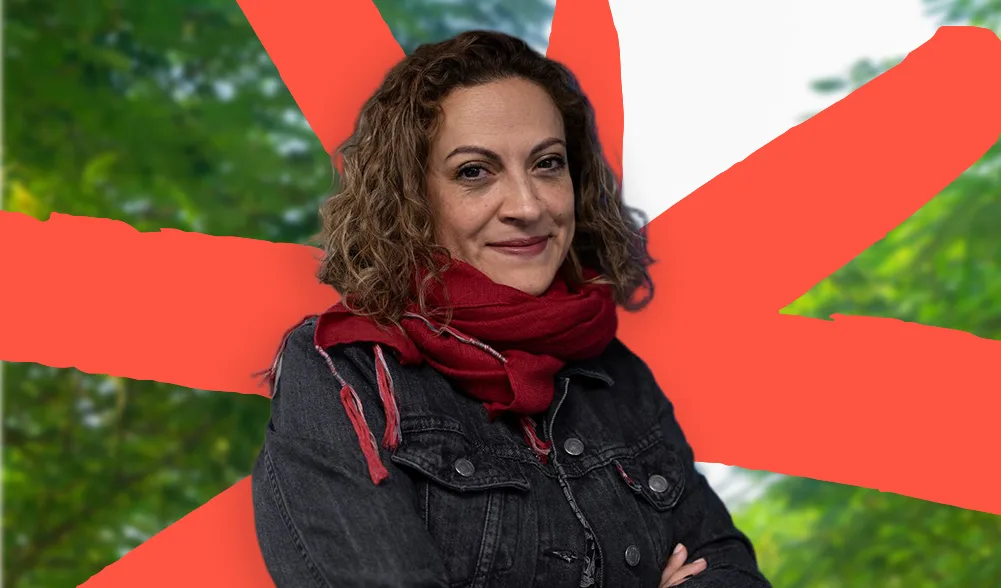
Jineth Bedoya is a prominent investigative journalist in Colombia. This case concerns her abduction, torture and sexual assault committed against her in May 2000. The attack took place at the entrance to the infamous Modelo prison in Bogotá to interview a prisoner as part of her journalistic work.
Ms Bedoya brought her case to the Inter-American Court of Human Rights because the government failed to adequately prevent the attack and failed to carry out a diligent, impartial and effective investigation to establish what had happened, and how it was allowed to happen, including the responsibility of those involved.
Heightened protection for women journalists
The Court considered that, at the time of the attack, Jineth Bedoya faced a heightened risk because of the intersection of her status as a woman and her work as a journalist.
During the proceedings, evidence was provided that indicated that the threats against Ms Bedoya were real and there was a high probability that she would be the victim of an attack. Further, the Court established that the government failed in assessing and implementing protective measures to address the specific risks she was facing as a woman journalist.
The Court considered that, in this case, the sexual violence perpetrated against Ms Bedoya was aimed at punishing, silencing and intimidating her because of her journalistic activities. Following established precedents, the Court concluded that the abduction and sexual assault amounted to torture. Importantly, the Court found that State agents had directly participated in and facilitated the attack, meaning that the State's responsibility arose not only from its failure to prevent the attack, but also from the direct involvement of State agents in its perpetration.
The effect of violence against women journalists
According to the Court, freedom of expression was violated in two ways in this case: on an individual basis, consistent in Jineth Bedoya's possibility to seek, receive and impart information or ideas, which was hindered by the abduction and torture; and in its social dimension, referring to society's right to receive such information and ideas. Attacks like those perpetrated against Ms Bedoya have the effect of reducing the information received by society and result in a chilling effect among other journalists, in particular women journalists. By silencing or discouraging women from participating in public debate the voices and points of view of women in the public marketplace of ideas are reduced and the lack of gender diversity in journalism results in a decrease in pluralism and undermines the democratic debate.
In terms of reparations, the Court ordered a comprehensive set of measures addressing both the harm suffered by Ms Bedoya and the structural conditions that contributed to the violations. These included measures of satisfaction (publication of the judgment and its official summary, an annual scholarship, and the production and dissemination of the "No es hora de callar" programme), rehabilitation measures, and compensation for pecuniary and non-pecuniary damage. The Court also ordered a set of guarantees of non-repetition aimed at addressing the structural context of violence against women journalists, including the design and implementation of a comprehensive protection policy for journalists with a gender-sensitive approach, the creation of a public data-collection system on threats and violence against journalists and human rights defenders, the establishment of a fund for the prevention, protection, and assistance of women journalists who are victims of gender-based violence, and the creation of the "Centro Investigativo No es Hora de Callar".
Obligations towards women journalists
The Court recalled that, according to the ACHR, States have an obligation to afford an effective remedy within the judicial system, compliant with rules on due process, to victims of human rights violations. However, this duty is also heightened in the case of violence against women journalists. This is due to the obligations established in the Belém do Pará Convention for preventing and protecting against gender violence. As such, when crimes of this nature take place, investigative authorities are required to identify the specific risks and factors that can cause violence against women journalists on the basis of their gender and their work.
In this case, the State failed to comply with these obligations, particularly due to a series of failures in evidence-gathering by the authorities. In fact, because of these failures, Jineth Bedoya was compelled to collect and store evidence that she thought might prove relevant at a later stage. The Court further found that the investigation had been marred by the use of gender stereotypes and discriminatory treatment on the part of the domestic authorities. Rather than directing their efforts towards identifying and locating the perpetrators, the prosecuting authorities focused instead on scrutinising Ms Bedoya's personal life, and the first prosecutor assigned to the case put questions to her that were revictimising in nature. This revictimisation was compounded by the fact that Ms Bedoya was required to recount the events and give statements to the investigating authorities on twelve separate occasion.
This failure to investigate by itself amounted to discrimination on the basis of gender. Moreover, the Court emphasized that the lack of efficiency in cases of violence against women, alongside an environment of insecurity and distrust in the judiciary, facilitates and promotes impunity.
Impunity in cases against women journalists
The Court concluded that these issues, as well as the violence perpetrated against Jineth Bedoya, are likely to cause a chilling effect on other journalists. The Court, however, added that there is a specific gender element in the case: the lack of justice in attacks against a prominent woman journalist sends a dissuasive message to women journalists in general.
The Wider Impact
Setting standards and driving change
The Court's decision in this case sets a binding precedent for Latin American and Caribbean states and an authoritative reference for other jurisdictions around the world. The case sets key standards for the protection of women journalists.
The Court recalled that States Parties' general duty to respect and guarantee human rights under the American Convention on Human Rights (ACHR) is reinforced by the Belém do Pará Convention's obligation to put in place an appropriate legal framework to prevent violence against women. Building on this framework, the Court held that States have a duty to adopt a differentiated, gender-sensitive approach when assessing risks faced by women journalists, recognising that they are exposed to specific forms of violence -including sexual violence, harassment, and intimidation- that are distinct from, and often more severe than, the risks faced by their male counterparts.
The case's legal impact:
• Law 2358 of 2024 ("Ley 2358 de 2024"), enacted in June 2024 and formally launched in September 2024, created the "No es Hora de Callar" Fund for the prevention, protection, and assistance of women journalists who are victims of gender-based violence. The law explicitly ties its reporting obligations to compliance with the Inter-American Court's judgment of 26 August 2021 in "Bedoya Lima y otra vs. Colombia".
• Decree 0277 of 2026 (18 March 2026) subsequently regulated the operation of the Fund, invoking paragraph 195 of the Bedoya Lima judgment directly and requiring mandatory participation of delegates from the "No Es Hora De Callar" campaign and FLIP in fund decisions. The fund is administered by Colombia's Ministry of Equality, and its creation was described by officials as a reparation measure.
◦ Suin-juriscol
◦ Ministry of Foreign Affairs of Colombia
• The Centro Investigativo y de Memoria "No es Hora de Callar" — another reparation measure ordered by the judgment — was formally handed over to Bedoya and her mother on 11 March 2026 and opened to the public on 7 April 2026, in the Teusaquillo district of Bogotá. The centre includes a memory and exhibition space open to the public, areas for psychotherapeutic support and accompaniment of survivors of sexual violence, an auditorium, and facilities intended to host forums, documentary screenings, and meetings between journalists and human rights defenders.
• In June 2026 Colombia passed a new law mandating gender-focused training for public officials.
• In 2025 and 2026 the Presidential Council for Human Rights and International Humanitarian Law (Consejería Presidencial para los Derechos Humanos y el Derecho Internacional Humanitario) designed and developed the national data-collection system on violence against journalists and gender-based violence against women journalists, in compliance with a reparation measure ordered by the judgment. On 9 July 2026, this national data-collection system was formally transferred from the Presidential Council for Human Rights to the Office of the Ombudsman (Defensoría del Pueblo), which will now be responsible for its ongoing monitoring.
• The case decision was also cited in subsequent landmark cases, such as: Palacio Urrutia v. Ecuador, Moya Chacón v. Costa Rica, Leguizamón v. Paraguay, and CAJAR v. Colombia.
Our Role
Supporting the judgment and shaping implementation
Media Defence's partner in Colombia, Fundación para la Libertad de Prensa (FLIP), and the Center for Justice and International Law (CEJIL) led on the case. Media Defence intervened as amicus curiae before the Court addressing (i) the context of violence against women journalists in Colombia; (ii) the special duty to protect journalists in the Colombian context; (iii) the duty to provide a differentiated approach to the protection of women journalists; (iv) the duty to provide safeguards for women journalists' reporting activities; and (v) how sexual violence against women journalists and its impunity generate a chilling effect on freedom of expression.
To access the amicus brief, please click here. La Intervencion en Espanol.
Media Defence also took part in meetings with the Presidential Council for Human Rights and International Humanitarian Law (Consejería Presidencial para los Derechos Humanos y el Derecho Internacional Humanitario) in connection with the development of the data-collection system on violence against journalists and gender-based violence against women journalists, and contributed to the risk map that forms part of the system.
Further information
https://www.mediadefence.org/news/jineth-bedoya-a-landmark-judgment-for-the-protection-of-women-journalists/
The judgment (in Spanish) can be found here.
Explore More Case Studies


Senegal: Media Defence and SLS’s Rule of Law Impact Lab File Case Before ECOWAS Court Challenging Internet Shutdowns
Filing on behalf of AfricTivistes and Two Senegalese Journalists Seeks Interim Measures to Prevent Internet Shutdowns. READ IN FRENCH

Focus on Turkey: Arbitrary Arrests and Abuse of the Legal System
The precarious state of press freedom in Turkey, entwined with a deteriorating democratic environment, poses significant challenges to journalists. Increasingly