We are deeply saddened by the death of Dr Chutima “Oi” Sidasathian, the Thai journalist who dedicated her career to reporting on corruption and rights abuses. Her work on the trafficking of Rohingya refugees, and later on funds diverted from a lending scheme meant for rural farmers, brought more than a decade of vexatious prosecutions against her. Chutima passed away on Saturday 15 August 2026, aged 44, of pancreatic cancer.
Media Defence has supported Chutima’s legal defence since 2015, and many of our staff have had the honour of knowing her in the years since. Those who met her noted the same qualities: immense courage and a wry sense of humour. She refused to be silenced and spent her last years campaigning to combat strategic lawsuits against public participation (SLAPPs) and to repeal the criminal defamation laws used against her, so that other Thai citizens might live more freely, especially those from marginalised communities. What Thais deserved, she told us in 2023, was “mutual respect and laughter without any oppression or control from those in power.”
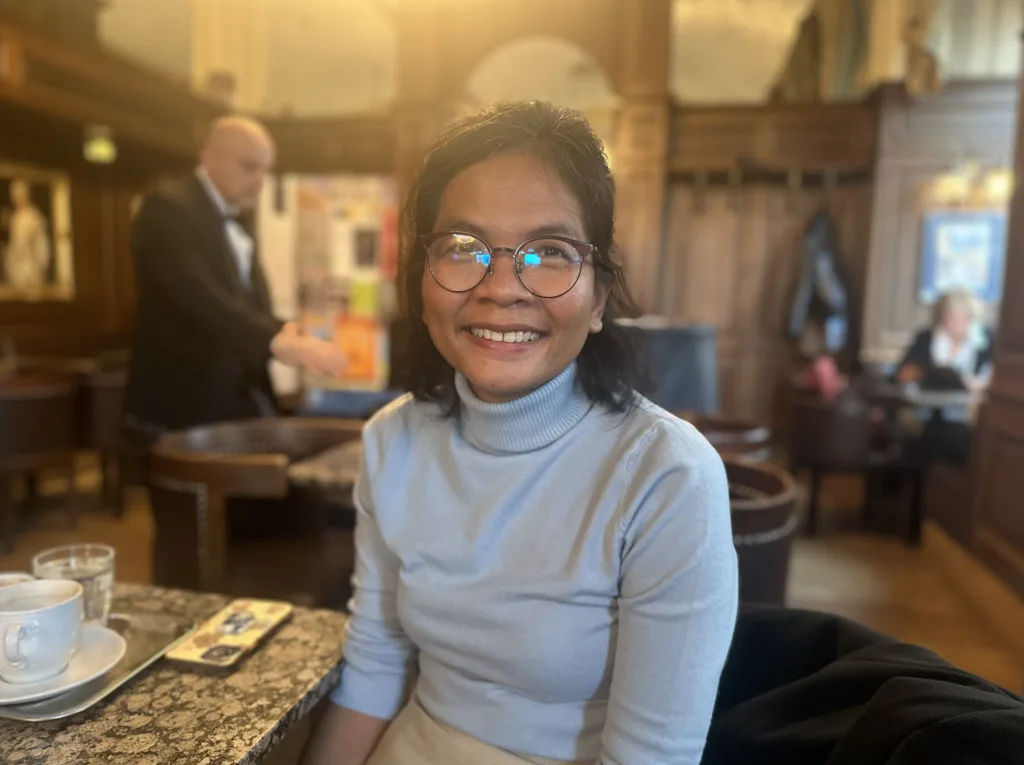
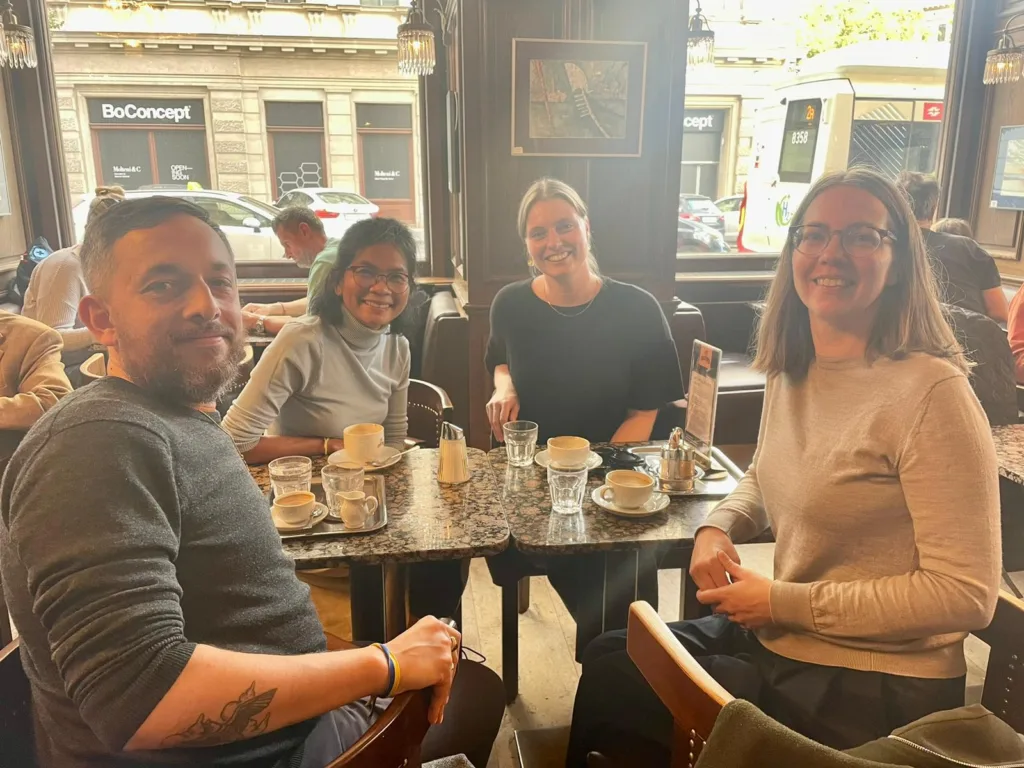
We last saw her in October 2025, in Vienna, where she was receiving treatment and where several colleagues were attending the IPI World Congress. The weather was miserable. The warm, old-fashioned café was packed, yet her characteristically exuberant greeting made her easy to find in the crowd. We sat over Sachertorte and coffee while she captivated us for several hours with stories of her life’s work and the reforms she still wanted to see.
She knew by then that she had late-stage pancreatic cancer. She was still facing legal proceedings that carried the risk of imprisonment for her reporting, and she had lost her partner, the journalist Alan Morison, to cancer only months earlier. Yet continuing to fight injustice was, for her, non-negotiable.
Chutima was born in 1982 in the Non Thai district of Nakhon Ratchasima. She studied liberal arts at Phuket Rajabhat University and political science at Ramkhamhaeng, before completing a doctorate in Asian studies at Walailak, where her thesis was on Rohingya refugees. In 2009 she joined Phuketwan, a small English-language outlet covering abuses against the Rohingya almost daily. There she met its founder, Alan Morison, the Australian editor who became her partner.
At the time, Rohingya fleeing persecution in Myanmar were leaving by boat in their thousands. Reuters found that Thai officials were delivering many of the refugees to traffickers, who held them in jungle camps near the Thai–Malaysian border and demanded ransoms from their families. Those whose families could not pay were held indefinitely, and many died in the camps.
Phuketwan’s coverage made it a key source for international correspondents, and Chutima worked as a fixer and interpreter alongside the Reuters reporters whose investigation won the 2014 Pulitzer Prize for international reporting. Her own reporting with Morison on the treatment of Rohingya boat people had already won a 2010 Award for Excellence in Human Rights Reporting from the Society of Publishers in Asia.
The work carried acute dangers. An activist guide once led her into the jungle to see a camp where people were being held, warning her to stay among the trees and keep low because of the armed guards. That, she said, was when she first understood what she was risking. Intimidating calls followed, and anonymous photographs of guns, yet she continued to report.
Independent of her journalistic work, she also traced missing relatives for families desperate for news. One man, missing for twenty-four years, had been abandoned by traffickers and had rebuilt his life on a remote island. He told Chutima he could not return to Myanmar, so she helped him record a video message and travelled for days, at great risk to herself, to deliver it to his family.
The reporting also brought legal consequences. In July 2013, Phuketwan republished a 41-word paragraph from the Reuters investigation implicating Thai naval officers in the trafficking. That December the Royal Thai Navy filed a criminal defamation complaint against Chutima, Morison and their publisher, alongside a charge under the Computer Crimes Act, which together carried a possible seven-year prison sentence. The navy offered to withdraw the case if they apologised. Both refused, insisting they had reported in the public interest.
The Phuket Provincial Court acquitted them in September 2015. By then the case had cost Morison much of his savings and driven away the site’s advertisers. Phuketwan closed that December.
In early 2021 Chutima began her next investigation, posting on Facebook about farmers in Nakhon Ratchasima who were being pursued for debts on loans they said they had never received. She found that money from a government lending scheme had allegedly been diverted, and her posts criticised local officials in the Banlang sub-district in what became known as the Nakhon Ratchasima banking scandal. Across sixteen villages she detailed the harm the scheme had done, including financial ruin and three deaths by suicide widely believed to be connected to the debts.
As she talked to the villagers, she asked herself what she would do if it happened to her. Without the money or the standing to respond, she would have been powerless. As someone from the same province, who had broken out of what she called “the cycle of poor education”, she knew she had to help them seek justice.
Once again, she did more than reporting. She sat with the farmers for hours before they testified, went through statements with those who could not read or who struggled with the legal wording, attended their trials, and funded the education of children in families the scheme had affected.
Five criminal defamation complaints followed, brought by the mayor of the Banlang sub-district, amounting to nine charges, each carrying a potential two-year sentence. In December 2022 she was charged with the first three and briefly detained. There she found herself among people she had previously written about. They asked her to stop reporting on them once she got out. She laughed and told them not to worry. “Thanks to my reporting,” she said, “I am considered a criminal now as well, the same as you.”
She carried that irony into her advocacy, fighting her own cases while campaigning to repeal the laws being used against her, and hoping that being labelled a criminal a second time would “conclusively demonstrate the injustice of Thailand’s criminal defamation laws”.
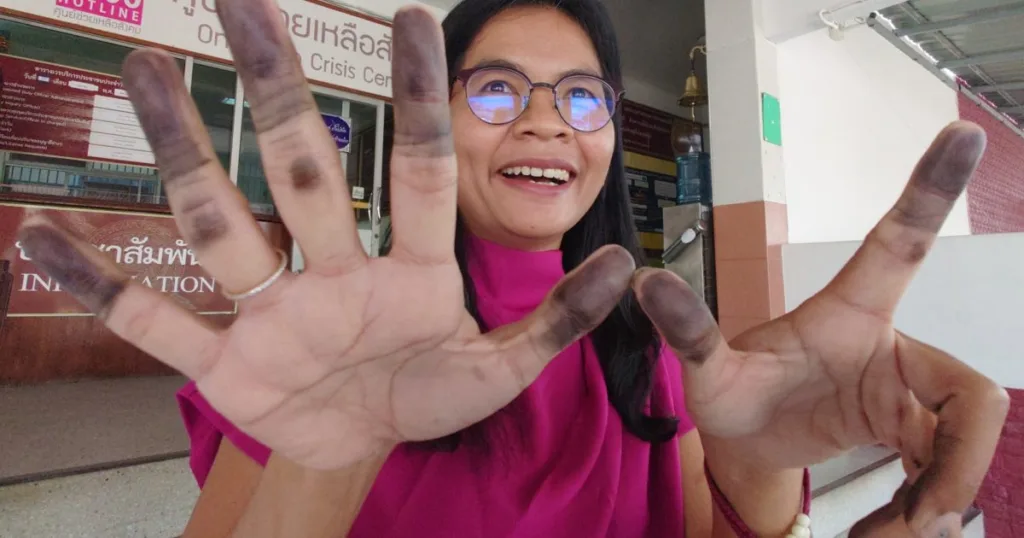
In October 2023 Thailand’s National Human Rights Commission found the case against her to be a SLAPP. The following March the Nakhon Ratchasima Provincial Court acquitted her on the first three charges, with the judge confirming that she was entitled to make genuine criticism of local administrators. Prosecutors later issued non-prosecution orders in three more cases. In 2024 she was shortlisted for Index on Censorship’s Freedom of Expression Award.
The government went on to establish a Special Commission of Investigation, and the Government Savings Bank’s own inquiry confirmed what Chutima had found. Of the 45 million baht loaned through the scheme, residents of the sixteen villages had received only 12 million.
In 2025 she mourned Morison while her own health deteriorated. She moved to Vienna for treatment, several thousand miles from home. The criminal proceedings against her continued throughout. Her lawyers formally requested that the final charge be withdrawn, on the basis that it had no merit and that her health made travelling to face it near impossible. One case was still open when she passed away.
More than 25,000 criminal defamation cases have been filed in Thailand since 2015, according to Office of the Judiciary figures compiled by ARTICLE 19. The threshold for bringing one is low, and cases routinely proceed to trial, with the burden falling on the defendant. Once it starts, it is the process that punishes, through years of hearings and the ongoing threat of prison.
In the café, Chutima asked us to keep telling her story, particularly for young Thai journalists who might read of the cases against her, or who are already facing cases of their own, and decide to stop writing. She knew what it could cost those who carry on:
“Being brave enough to fight for change is not enough in Thailand. You have to accept that it may put your own future and family at risk… the Thai government does not have any mechanism to protect the people who are brave enough to fight for change.”
But she refused to accept that it had to stay that way.
“I intend to keep fighting until my very last breath… I would like to see the Thai government take serious steps to reform the criminal defamation laws that threaten ordinary citizens and democracy itself.”
To anyone who could help, she added: “Please continue to support the campaign to amend this law. Your help matters.”
Her death is felt across Media Defence. Her commitment, and her connection to the communities she reported on and stood beside, remind us of the work we exist to support. We will continue to defend journalists and to challenge the laws used to repress them. Our thoughts are with Chutima’s family and friends.